

Author’s Note: On November 1, I’ll be running the 2026 New York City Marathon in memory of my uncle Chris and in support of the Parkinson’s Foundation. As this newsletter lands in your inbox, I’m likely sprinting up and down a hill as Tuesday is for speed work. If you’d like to learn more about Parkinson’s disease or support my fundraising efforts, you can visit my fundraising page here.
About 18 months ago, I tried to create lifestyle images for an e-commerce product listing using AI. I used Flux models from Black Forest, first providing reference images and then wrote a prompt of the variations I wanted to see.
It… kind of worked? It was for a baby hooded towel (a product we sold at my old job), and I wanted to showcase it being worn by a kid at sunset. I shared a few pictures of the hooded towel on its own from different angles and configured a few settings on Hugging Face (the platform I was accessing Flux through). And boom, I had a realistic picture of a kid wearing the hooded towel with a sunset in the background. The problem was that the kid only had four fingers.
Fast-forward to now. AI-generated images have become strikingly similar to real world images. It can be difficult to tell the difference between images (and content) generated by humans and AI. Fewer missing fingers, and a heck of a lot better image quality.
But the line blurs between who did what, between human-created and AI-generated content. Where this particularly creates problems is on social media.
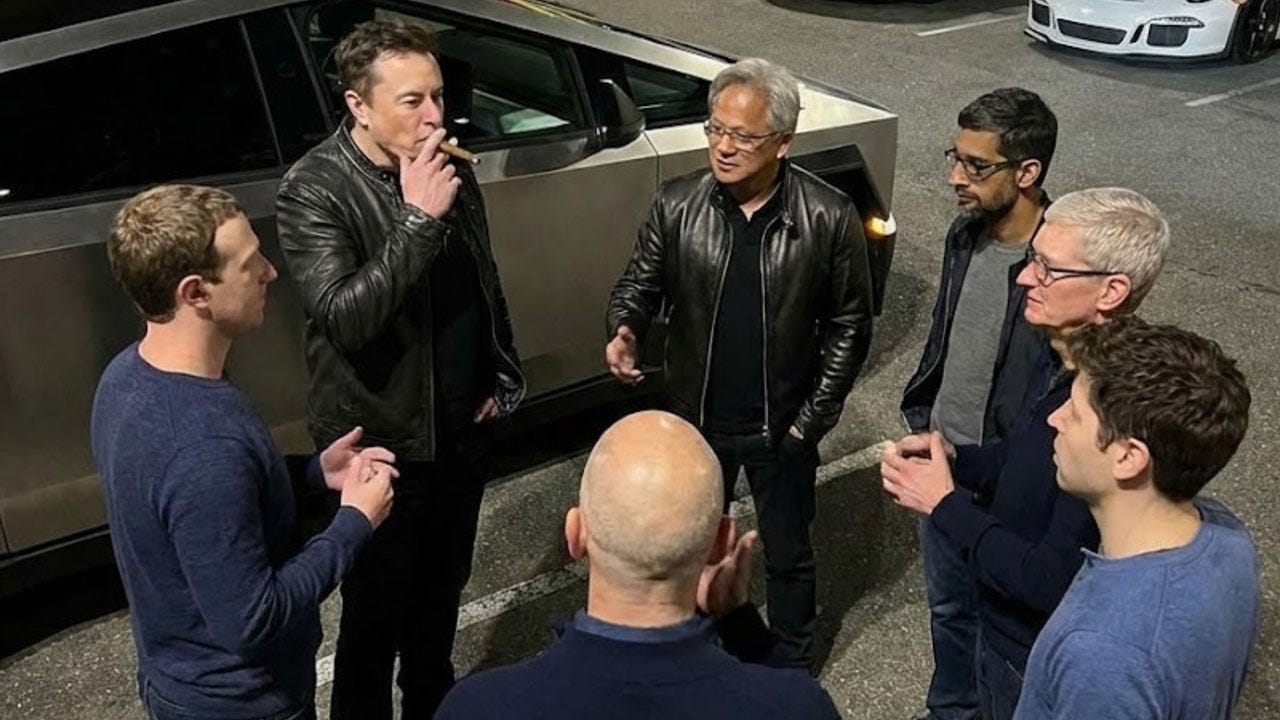
Social media is already flooded with images and videos that misrepresent the lifestyles people portray or the experiences they claim to have. It’s not hard to think that everyone is going on that luxurious vacation or driving that fancy car based on the videos shown on your feed. It was misleading before AI and certainly is even more confusing now.
Enter Google’s SynthID Detector. This new technology places invisible watermarks on AI-generated content, including images, videos, and text. It not only preserves content quality, but also (as per the product launch announcement) “remains detectable even when the content is shared or undergoes a range of transformations.” Simply put, it can’t be easily altered or tweaked to remove the unique identifier.
Google is beginning to roll out the detector, which allows users to upload content that was created using Google’s AI models or tools. Then, the detector indicators whether a SynthID watermark is present or not, as well as which portions of the content are more likely to be AI-generated. Google partnered with NVIDIA to create this open-source technology. Important point as Google could have gated this product behind their Gemini brand of models.
In August, I wrote about the EU AI act that established requirements for all LLM builders to add unique identifiers to their output. This “watermark” was meant to tag any content generated by AI models (like Claude) so users could see. I broke down this story from the branding opportunity angle, but today, I believe it’s the safety protocol needed to quell AI safety fears.
I believe watermarking AI-generated content is a monumental step towards building trust in AI. There is plenty of fear-mongering in the news, with some notable accounts coming from ex-frontier AI labs employees. Consider this group of former OpenAI safety researchers or Jacob Coxon, a former Anthropic employee who published an extensive post on X sharing his concerns about how dangerous AI may become.
But what if we could identify AI agents and AI-generated content for what they are?
Watermarks for AI can be viewed as IDs and passports for people. When we travel internationally, we carry passports to verify our identities and establish our eligibility to enter another country. We use driver’s licenses to verify that we are legally allowed to drive a car. Identity verification has been around for decades. The concept itself is nothing new.
As AI gets better at replicating human actions and decision-making, we need better ways to identify it. Watermarks give us another tool to check whether a video or email was generated by AI. They won’t tell us how much human involvement went into creating something, but they do give us a useful signal about where it came from.
Of course, this only works if people have access to detection tools and actually use them. Still, making it easier for anyone to check content for AI-generated material is a meaningful first step towards helping people make more informed decisions about what they see online.
It would be wise for the frontier AI labs to form a coalition for embedding and detecting watermarks across models and content types. Essentially, the industry needs its own version of SynthID, ideally built on open-source technology so that any company can adopt and improve it.
However, I’m not naive. This will be a difficult task to take on.
Getting Google, Anthropic, OpenAI, and SpaceXAI in a room to share technical requirements on how all of their models can adhere to the same watermark identification standard will be tough. These companies are unlikely to share their secret sauce, which may surface during the creation of these standards. But a common standard could make AI-generated content easier to identify, regardless of which model created it.
You know who could benefit from better AI content detection? Meta.
Think about the volume of AI-generated slop posted across Instagram and Facebook. Beyond low-quality content, bad actors are able to manipulate people’s behavior and beliefs with hyper-realistic AI. Better tools for identifying AI-generated content could give platforms another way to understand what is being posted and who, or what, is behind it.
Meta has been clobbered in the news and in the court room on its lack of safety controls for young people. Recent reporting on a major social media litigation settlement ($17 billion!) adds to that pressure. The Social Reckoning movie isn’t doing Mark Zuckerberg’s public image any favors either. But at least in Zuck’s case, its first weekend in the box office was a flop.
Watermarks can be one piece of the puzzle in the broader effort to make AI more transparent. They can help platforms identify AI-generated content, while a whole host of other technologies could authenticate AI agents, track their actions, and establish what they are allowed to do. There’s a whole AI compliance and safety vertical that can be born out of protecting and surfacing watermarks.
Google’s actions represent meaningful progress towards AI safety. We should build guardrails that check for AI-related actions and content generation. This allows platforms and websites to better understand the actors behaving in their arena and set up controls on how to best interact with them, as well as keep their actions in check.