

If you’re a new subscriber, you likely think that Relentlessly Curious is all about AI. And you’d be right, as that’s what it has become and what it will continue to be. I’ll tell you what: the AI news cycle is the gift that keeps on giving for tech writers. There’s a never-ending stream of content to write about.
But here and there, I plan to go back to my consumer brand roots for the sake of mixing it up and (hopefully) providing helpful information.
Holiday shopping season is upon us. You’re going to see plenty of flashy discounts over the next month, and at the same time, you’re going to be convinced to spend a lot more than you originally wanted to. Consider this your heads up that brands will be as cunning as ever to maximize performance at this time of year.
On the flip side, the holiday shopping season is a tricky time for consumer brands. Although some rely on the period between Thanksgiving and Christmas to drive the lion’s share of their annual sales, many brands are leery about the type of customers they are acquiring at this time of year. Everyone is shopping with a deal in mind; thus, brands are pressured into offering discounts for the sake of staying competitive.
Customer acquisition costs are already steep for direct-to-consumer (DTC) brands, and a hyper-competitive advertising market will make matters worse.
Offering a deep discount on the first order is usually worth it if you can get that customer to come back. But new-to-brand shoppers are more likely to be one-time customers as they’re shopping for a specific need in the way of a gift. They want to buy that gift for as low of a price as possible.
Strong brands know this and adjust their customer acquisition playbook to at least get something out of the deal. Let’s dive into four holiday offers that have a hidden agenda.
The Lead Generation Play: Exclusive Member Sale
The eye-popping text on websites. The juicy discounts. But wait, this deal isn’t for you. You’re not part of the brand’s members club.
Members-only sales are becoming more popular as brands need to get something in return for providing you a discount. To get past the digital rope, you’re going to need to show some ID in the way of an email or SMS (cell phone number) sign-up.
Forking over your email or phone number to gain access to steep discounts is a trade most are willing to make. You get a discount, but you’ve also provided consent for a brand to reach out to you via email or text in the future. So be aware of the onslaught of messages you may receive after signing up for the “Member Club”.
Member clubs tend to offer first dibs on new product drops, exclusive colors and sizes, and in-person experiences. They help brands develop “power users”, who tend to be their most loyal (read: profitable) customers. Right now, Lululemon is offering early access to their Black Friday sale for members only. Last holiday shopping season, I bought from an Alo Yoga member sale.

Remember, brands are worried you won’t purchase from them again. By providing your contact information, you’re opening the possibility of buying from the brand again. And the brand will take their chances on that trade.
Tip: You can always unsubscribe from an email or SMS list.
The Average Order Value Play: High Free Shipping Threshold, High Shipping Fee
This kind of offer will get you every time. It’s exactly the kind of deal that gets you to spend more money than you had originally planned on.
For example, athleticwear brand Haus is offering 50%+ discounts across their catalog. Check out this quarter zip. Normally priced at $110, it’s currently on sale for $49.


Here’s the catch: unless you place an order for $100 or more, Haus is asking you to pay a steep shipping fee. $12 to be exact. So that $49 quarter zip just became $61 quickly.
This strategy is a classic way to increase their average order value. They may not be able to sell a $49 item for a profit, but that $12 shipping fee likely boosts their margin from the red to the green.
From a psychological perspective, Amazon Prime has trained consumers to have a strong disdain for paying shipping fees. Brands know this. And they also know that although a shipping fee may hurt their website’s overall conversion rate, they’ll make more money as customers will buy more items to be above the free shipping threshold (in turn, increasing the average order value).
For Haus, offering steep discounts on an individual product isn’t likely a wise business decision for DTC brands (depending on the price). But if customers buy multiple products, the margins are stronger. You can usually throw multiple pieces of clothing in the same package, which won’t cost much more than if only one item is in the package.
Tip: Be disciplined about what you intend to buy and keep in mind that you are still receiving a discount (even if a high shipping fee is added onto the price).
The Overstock Play: Gift with Purchase
You’ll see these offers here and there. Spend above $X amount, receive a free hat, or serum, or travel bag. You think, “Oh this is great, I’ll spend more so I can get an extra item for free. It’ll be a wonderful stocking stuffer.”
It seems like a fair trade between the customer and the brand. You spend more than you originally intended, but you receive a gift for your troubles.
However, don’t think the brand is offering you a free item out of the goodness of their heart. Ask yourself: would I buy this “gift” on my own?
Unlikely. And that’s probably the answer for most people. It’s common for brands to offer a gift with purchase because they are overstocked and can’t figure out how to sell these products, so they’d rather give them for free than have them sit at a warehouse and collect storage fees. Overstock isn’t always the reason behind the free gift deal, but it certainly is the most common one.
Think about it: the “free” gifts that you’ve received are likely failed product launches or accessories that are barely profitable on their own. When customers buy more products to reach the free gift order value threshold, they’re likely covering the cost of goods sold for the product they’re receiving for free. It’s all a consumer psychology strategy.
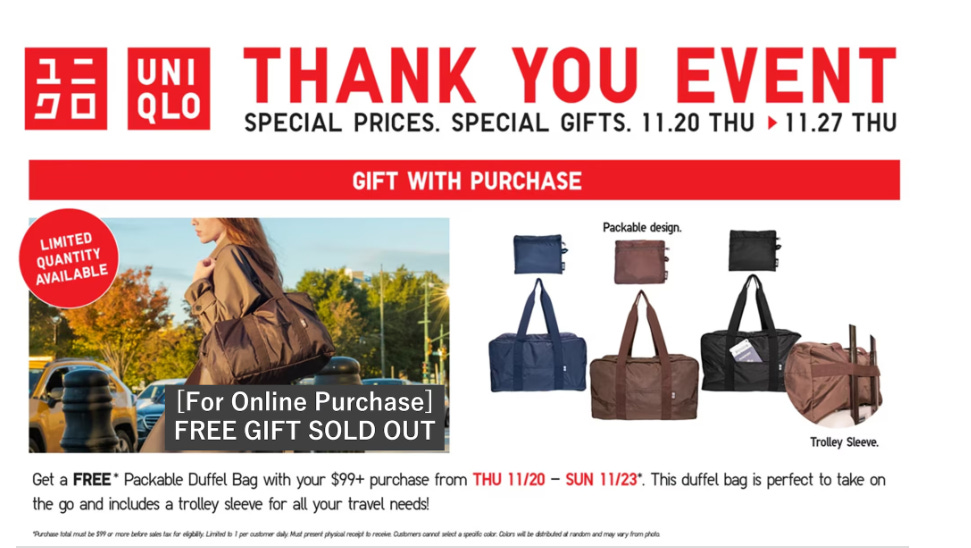
Check out Uniqlo’s gift with purchase (on orders of $99+). You’ll receive a free duffle bag if you hit the order threshold. But in fine print, Uniqlo mentions that you don’t get to choose the color. This could indicate that Uniqlo made several duffle bags in colors that flopped and needed a way to get rid of this inventory.
Tip: Keep in mind that free gifts aren’t really “free”.
The January Damage Control Play: Final Sale
I find this one to be the most diabolical, as customers likely don’t internalize what “final sale” means. The brand offers you a healthy discount, but the catch is that you can’t return the product.
January tends to be a brutal month for a consumer brand’s P&L. Revenue hits its annual low point as shopper fatigue sets in from all the holiday shopping spending. Pair that with a spike in refunds as customers return gifts, and you end up with a rough story.
Depending on your brand’s product category, there may not be much you can do to counteract the revenue drop. Or you can do some damage control and not allow customers to return the products they bought at a discount. Huge win for the P&L, but not great for customer experience.
Paige, which is known for their comfortable jeans, is running a Black Friday (final) sale. The inclusion of the word “final” implies that you can’t return the product after you bought it.
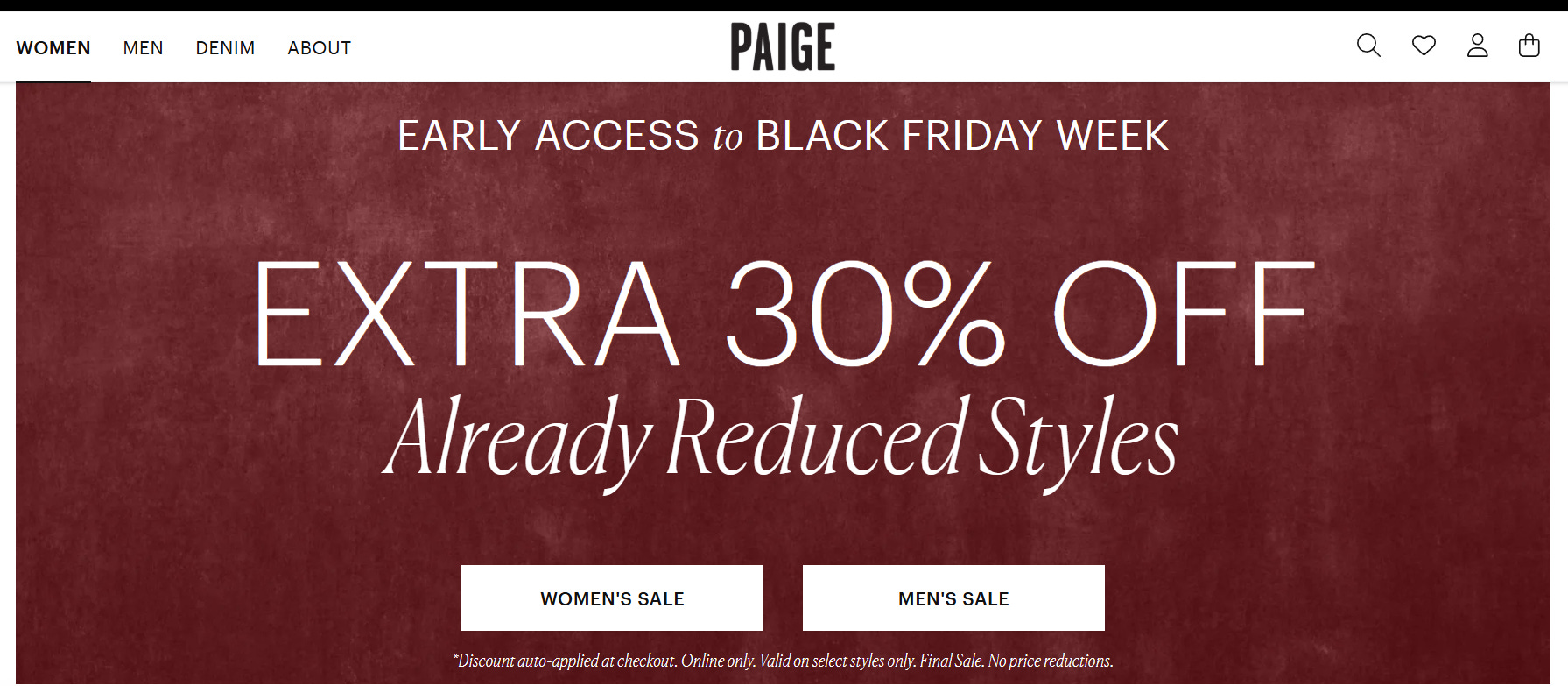
This is difficult for gift buyers who must guess someone’s size. It doesn’t make economic sense to buy two sizes and let the recipient choose which one fits better as they can’t return the other size.
If you know that you’ll keep the item, more power to you. Take advantage of “final sales” for the sake of the discount. But don’t be alarmed when you try to return a gift and are out of luck.
Tip: Don’t let flashy messaging fool you: purchases on final sales should be viewed as purchases from the clearance rack.
These plays aren’t inherently bad, but they are designed to shape your behavior. Happy holidays and be mindful when shopping!