

In How to Build a Category-Defining Consumer Brand in 2025: Part I, I presented the case that the vast majority of consumer brands sell commoditized products. To stand out from the crowd, you need to “create a high-quality, innovative product.”
Well, that’s easier said than done. And even if you succeed in creating the next big thing, a slew of copycats will pop up and steal market share quickly. In most cases, your best bet is to sell the brand to a strategic buyer (in CPG, think P&G, Unilever, Estee Lauder, etc.), who will take care of distribution to the masses. The CPG conglomerates rarely innovate internally, and rely on acquisitions of challenger brands, as their targets can move quicker and make bolder product and branding choices.
So, if the next category-defining product idea isn’t coming to mind, what do you do?
You still create a quality product but innovate on distribution instead.
When I say distribution, I’m referring to how a brand finds and distributes their products to customers. You could create the most innovative consumer product in the world, but if you don’t have a way to advertise or distribute via sales channels, you’re not going to achieve any commercial success. For example, distribution could mean going viral on TikTok, leveraging creators, or dominating Amazon search results. Anything that gets your product into more hands, faster.
Why Distribution Wins
I think this image illustrates the audience and logistics elements of distribution quite well.
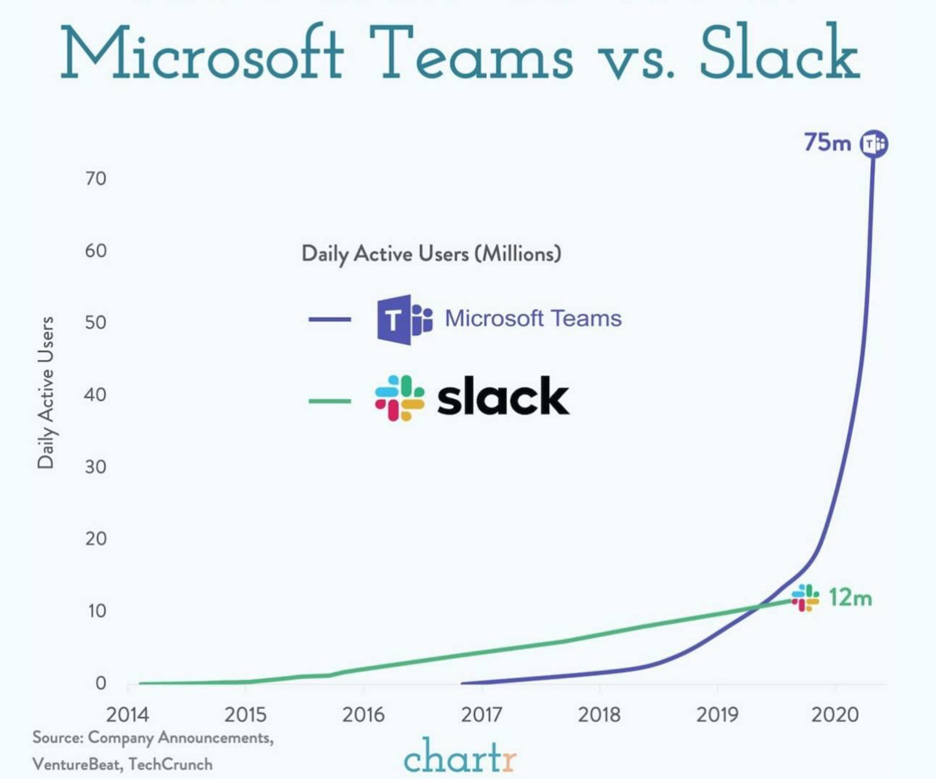
As someone who has used both Slack and Microsoft Teams, I’d definitely say that Slack is a superior product. In fact, I would go far enough to say that it’s a high-quality, innovative product (yep, I’m quoting myself here). Microsoft Teams has a clunky user experience and always seems to lag on me.
But Teams is a Microsoft product. And Microsoft has a chokehold on nearly every Fortune 500 company (ever heard of Microsoft Office?). Microsoft leveraged their existing audience to cross-sell and distribute Teams, scaling significantly faster than Slack ever could dream of. I know, this chart is somewhat outdated, and I imagine Slack is catching up, however the built-in distribution Microsoft has over Slack is an incredible moat.
…
Audience + Logistics = Distribution
Distribution can take the form of social media, by building a following through posting consistent content for your niche audience. That is, getting people interested in buying the product that you have to offer. Also, it could be by creating an e-commerce presence by launching onto Shopify and Amazon. Acquiring digital real estate on Google and Amazon search results pages to show up when customers are in the mood to make a purchase in your product category is a baseline requirement for digitally native brands. Additionally, a massive distribution unlock for brands is via retail partnerships. I’m talking about selling your product in Target or Walmart, or even a grocery store. That’s when you’ve made it big time. Retail partnerships aren’t just financially impactful, as they can put your product in front of millions every day. When you walk down a grocery store aisle, you see dozens, if not hundreds of brands.
Distribution can be broken down into two components: audience and logistics. The former being how you create brand and product interest, and the latter, how you operationally convert this interest into a purchase. It’s crucial to hone in on distribution as you need to find customers and have a way to sell them a product to grow a consumer brand (or really any business).
Now, how do new consumer brands gain access to such an audience? They partner with creators, who have already done the hard work of audience building.
…
Creator Case Studies
Many creators themselves have transitioned from being sole content creators to sophisticated entrepreneurs, diving headfirst into the consumer goods realm. Check out PRIME, a hydration beverage founded by Logan Paul and KSI (YouTubers). They were able to cash in on the broader better-for-you wellness trend by introducing a somewhat healthier version of Gatorade. And thanks to their respective followings of tens of millions of people, they have a huge audience to pitch the product.
In tandem, they (or more accurately, their teams) negotiated partnerships with huge retail stores (Walmart, Target, Tesco, etc.) to distribute their product. If you’re the sports drink buyer (person responsible for selection of a product category) at Walmart and Logan Paul tells you he’s got the next Gatorade in the works, you are going to listen. This is because creators with loyal audiences (measured by levels of social engagement) can reasonably expect that their fans will at least try the product they are offering. This de-risks the chance that PRIME flops and Walmart ends up with millions of 16-ounce bottles sitting in their warehouse.
But I think it’s worth noting, the PRIME hydration drink hasn’t come without controversy over product quality. It’s a good product, not a great product. However, with distribution via a massive creator’s following, it can achieve gigantic commercial success.
Let’s also look at Feastables, the chocolate company founded by Mr. Beast. Are the Feastables chocolate bars head and shoulders above that of Hershey or Godiva? I don’t think so. I like them, but I wouldn’t say they are a superior product versus the incumbents.
Furthermore, Mr. Beast is the largest and most prolific YouTuber. If he wants to sell chocolate bars, he can get people to buy chocolate bars since he has a massive and captive audience at his fingertips. Buyers at retail stores know this and are willing to place big orders so Mr. Beast’s fans can try out Feastables products. So Feastables quickly became omnichannel. I see them at the grocery store, pharmacy, and airport kiosks.
With such sheer ability to generate interest and attention in a product, Mr. Beast really doesn’t have to focus on selling directly to the customer. He can instead leverage his influence to get Walmart or Target to sell his chocolate bars, over having his internal team figure out how to ship to the end consumer. His audience enabled the logistics of selling the product. Of course, you can’t sell junk; but in today’s landscape, distribution often outweighs marginal differences in product quality.
…
How to Start with Creators
If you’re a consumer brand, what can you take away here? Partnerships with creators can provide you with distribution opportunities. But you don’t need a creator to be the face of your brand. You can start small, with social media content partnerships. Have them feature a product in one of their posts. There are also opportunities to launch a new product with a creator, ideally a product that appeals to their core audience (I vaguely remember the Naomi Osaka Sweetgreen bowl). And if you are truly all in, invite a creator to be on the payroll and play a role in shaping the future of the company (MKBHD joined Ridge as Chief Creative Officer).
Creator partnerships lend credibility to your product and brand. If Mr. Beast is willing to talk about your product, it must be a decent product, right? Not only are potential customers watching Mr. Beast’s videos, but also are the retail buyers that can get your products in physical stores, creating a major distribution unlock. It’s worth acknowledging that a partnership with Mr. Beast is wildly unrealistic for most consumer brands, but there are plenty of other creators that are in your wheelhouse.
Understanding your product and intended audience is critical when choosing which creators to partner with. Aligning yourself with the intended audience will ensure you have the proper distribution for scale. This can relieve the pressure of feeling you need to create a category-defining consumer product.